Depending on the material and composition of the object, light will be absorbed, reflect, or refract from it. Below are some diagrams and examples:
Absorption:

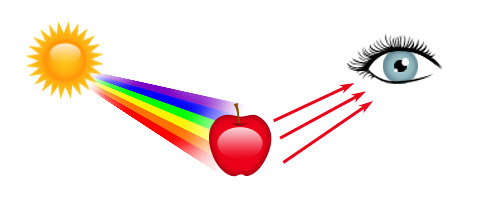
Light can be absorbed by certain materials, it can even bounce different colors off of the object depending on the color. If you bounce light off of a red object, the reflected light will be red. If you bounce light off of a blue object then the reflected light will be blue, and so on.
Reflection:

When light hits a surface, it will generally reflect off the surface at an angle reverse from the point of origin.

In this image, light is reflected off of the bonnet of a car. Because of the curved nature of the object, the light will bounce off in different directions.
Refraction:

Refraction occurs when a ray of light passes through two separate transparent mediums. The light changes speed as it passes through the second medium, causing it to bend.
Diffused Light:


No comments:
Post a Comment