Thursday, 9 May 2013

#67 GAD BA6: Can video games be used as a non pharmacological benefit?

Can video games be used as a non pharmacological benefit?

Over the last decade there has been much controversy surrounding computer games. Whereas the educational benefits of computers and computer games are well documented there have been concerns at whether computer games can affect the behaviour of the user and specifically whether there is any link to violence and racial hatred. One of the most common criticisms of video games is that it leads to increased tendencies for violence in youth.

This has been documented over the years by hundreds of studies, which have been conducted by a wide range of psychologists and government agencies with the aim of addressing the issue of harm. They studies targeted possible links to aggression, addiction, violence and even stereotyping. The results of the studies have always been conflicting, often causing much disagreement. Some studies have found that playing violent video games correlates with at least a temporary increase in aggression, while others using similar methods video game violence is not related to engaging in aggressive behavior. Another common theory is that violent games simply attract those that are already violent minded, not that it enhances violence and aggression in the average player. With that said, there are many counter arguments to the negative issues that video games create, those of which include education, health and even social behavior.

A large number of studies have been conducted on this topic and several have found a correlation between these two aspects. However, there have also been counter studies, conducted by groups such as The Harvard Medical School Centre for Mental Health and The British Medical Journal, that have found no definite link between video game usage and violent activity; and others still, such as the University of Utah study which actually identify positive benefits. These positive studies do not seem to get as much coverage as the adverse reports, so the purpose of this essay is to look at the positive effects of playing computer games, not the negative.

Firstly it is interesting to look at positive effects such as the therapeutic properties of games when played by children and to a lesser extent adults who have been diagnosed with chronic illnesses. In 2012 the University of Utah released a study (Kessler, R. (2012) Video Games Help Patients and Health Care Providers. University of Utah News Center, [online] 19th September. Available at: http://goo.gl/vRBd3.) that looked at the effects of regular gaming on patients with illnesses like Parkinson's disease, autism and even depression. The Utah researchers say that the study shows that video games can act as a "non-pharmacological interventions that may enhance patient’s resilience towards various chronic disorders via neuronal mechanisms that activate positive emotions and the reward system", put simply this suggests that rather than use expensive medicines with possible side effects, games can stimulate the brain, which can potentially help a patient’s demeanour as they face the daily challenges of their illnesses.

In some instances medical staff utilise existing computer games, but in others actually create games for a specific medical purpose, for example:

"In the Perspectives article, the team describes therapeutic video games, including their own Patient Empowerment Exercise Video Game (PE Game), an activity-promoting game specifically designed to improve resilience, empowerment, and a “fighting spirit” for paediatric oncology patients. The researchers also looked at other games that have been shown to help patients with several chronic diseases." (Kessler, R. (2012) Video Games Help Patients and Health Care Providers. University of Utah News Center, [online] 19th September. Available at: http://goo.gl/vRBd3.)


Motivational games, or games that cause motivation can come in many forms. The motivation itself can come from difficult challenges that the patient overcomes, creating a sense of achievement and defiance, or even just from general game play where the game constantly cheers on the player, congratulating the player as they go through the game.

Another study, carried out by Dr Daphen Maurer of the Visual Development Lab of Ontario's McMaster University, found that playing video games can actually be beneficial for your vision (Dreifus, C. (2013) How Video Games Could Improve Our Vision. The New York Times, [online] 27th August. Available at: http://goo.gl/crDVw). The conventional wisdom is that "You will go square-eyed if you sit in front of that screen any longer", but it is a matter of balance.  This is a valid comment if you do spend too much time in front of a screen, but conversely the study shows that playing fast paced games such as the Battlefield and Call of Duty series, that require an extreme amount of attention, actually train the brain and eyes to view things more sharply. They can also produce higher levels of dopamine and adrenaline. Dopamine is;

"a chemical messenger that helps in the transmission of signal in the brain" (Newton, P (Ph.D). (2012) From Mouse to Man. Psychology today, [online] 26th April . Available at: http://goo.gl/PsgTE.)

and adrenaline is;

"a hormone that stimulates heart rate, contracting blood vessels, and dilating air passages, all of which work to increase blood flow to the brain and oxygen to the lungs" (McGuigan, B. (2013) WiseGeek Adrenaline. WiseGeek, [online] 26th April . Available at: http://goo.gl/peDzC.)

So adrenaline and dopamine in a combination can potentially may make the brain more plastic.

So not only can video games provide non-pharmacological therapy, they can also improve vision and the brain’s response times. This is already rather more than computer games are often given credit for, but what else can they do? Quite a lot actually. Video games can provide pain relief, reduce stress and depression, and even improve your decision-making skills.

A group of psychologists at the University of Washington developed a game that helps hospital patients suffering from immense physical pain by using an age-old mental trick: distraction. The game, called Snow World, places the player in an Arctic wonderland environment, where they must throw snow balls at targets. The psychologists found that patients that played the game on a regular basis required less pain medicine during their recuperation.

"A video game may sound silly, but this particular game, Snow World, is a ground breaking experiment in virtual reality. In Snow World, Brown (Lt. Brown, a US Soldier injured in Afghanistan) could concentrate on throwing snowballs at penguins and mastodons to the music of Paul Simon, instead of focusing on the painful wound care happening at the same time." (Williams, R. 2013)

As demonstrated above, there are is obviously some real benefits resulting from playing games, especially when it comes to good health. But how do games achieve this, either intentionally or unintentionally, and what games do it best? Games like Bejeweled and Candy Crush (a tile matching puzzle game) as well as the SSX Tricky (a snowboarding video game) series all motivate the player as they go along. Either with a "You Rock" or a "Sweeet!" sound when a player achieves a combo move, or a reward for doing well. Other games such as Runescape (RuneScape is a fantasy massively multiplayer online role-playing game by Jagex) or World Of Warcraft (World Of Warcraft is a MMORPG by Blizzard Entertainment) use a reward system to motivate players, as well as a thank you from in-game non player characters and a quest completed achievement.

Fast paced games such as Battlefield 3 and Call of Duty require a player to constantly pay attention to both sound and visual information. It only takes a small distraction, taking your eye off of the screen, for the player to be killed, so attention is vital. The in-game characters have a variety of camouflages, design to hide amongst an urban jungle or a grassy field. Due to this, the players eyes and brain need to work harder to pick out enemies from the surroundings, which in turn trains the brains and eyes.

Distraction games, used as non-pharmacological therapy, come in a much broader variety. Of particular relevance in this respect is the case of Jane Mcgonical, a game designer, who stuck in bed for weeks after a head injury. The injury caused her great pain and unsurprisingly she began to get depressed. She said “I was like, I’m either going to kill myself or develop this into a game. Because after all, I’m a game designer.” (Oberndorfer, E. (2013) Jane McGonigal Talks Playful Recovery With SuperBetter. MedCrunch, [online] 16th April. Available at: http://goo.gl/Rfb0p.) So this is exactly what she did, she turned it into a game which she called Superbetter. This was a game that provoked positive emotions, strengthening social connections, building the players ability to tackle difficult challenges without giving up. She used all of it to turn her recover into a game, distracting her away from the pain. She says “The more I played this game, the happier, the more confident and the more confident I felt.” (Oberndorfer, E. (2013) Jane McGonigal Talks Playful Recovery With SuperBetter. MedCrunch, [online] 16th April. Available at: http://goo.gl/Rfb0p.). In her words, she didn’t just get better, she got super better, hence the games name. With this said, you can easily see how games that distract and motivate the player are a huge help, making the player/patient feel as if they can accomplish more, as well as distract them temporarily away from their pain.

McGonigal leads on from this by showing that you don’t need to have a injury or sickness to use her techniques. By engaging in the steps she used in her game SuperBetter, the average person can increase their life by an average of 10 years. Her steps consist of completing several simple challenges a day, boosting your physical, mental and emotional wellbeing. The steps compose of activities like raising your arms above your head for 5 seconds every hour or standing up and taking a few steps. Clicking your fingers 50 times while counting or counting down from 100 backwards in 7’s, as well as simply thanking someone you know who has helped you in the past.

The use of procedural rhetoric techniques deploy in games can be used to build up an image of an impossible task, while in reality it is actually pretty simple. Narrative can play a part in this, as demonstrated in many World of Warcraft quests. The quest begins with a non player character asking for help, mentioning that many “adventurers” have attempted the task before and have failed. As the player continues through the quest they are met with multiple encounters that further reinforce the idea that no one has been able to complete the quest before, such as skeletons in key locations and other non player characters. The build up of the narrative and visual keys place the player in a mind set that what they are doing is unique and special. Once they complete the seemingly impossible task, a feeling of defiance and pride is inevitable, no matter how small. This style is common in games that follow a narrative of player versus environment. World of Warcraft with over 10,000 single player quests and Runescape with over 400 much longer single player quests. Taking an example from the latter of the two, Dragon Slayer in runescape is a fairly long quest in Runescape, that can take the player several days. The quest revolves around collecting information for a map, a key, and finally to slay the dragon.

“Prove yourself a true hero. Kill the mighty dragon Elvarg of Crandor Island and earn the right to buy and wear the powerful rune platebody.” (Guildmaster, 409AD)

Throughout the quest you encounter “dead bodies”, non player characters acting as real players that cry out for help and assistance of give warning, as well as a strong narrative that builds up the difficulty of what is actually a fairly easy but time consuming task.


Evidently, there is some force behind the concept that games can be used as a non pharmacological device and arguably, it has been well documented and proven work. There have been multiple studies in favour to the argument, conducted by experts in the field. These studies have shown that there is a degree of effectiveness when using computer games to assist and improve patients illnesses. On a much more personal level, Jane McGonigal has felt the positive effects that video games can have on a persons mind when recovering from an injury or sickness. My overall verdict is that yes, games can be used a non pharmacological tool. However, it does not in any way repla

#066 GAD BA6: "40 hours of playing violent videos actually IMPROVED the sight of young gamers"

Parents of young children might find it hard to believe, but playing video games could be good for your eyes. Just ten hours of gaming for four weeks dramatically improved the vision of young men and women who as babies were almost blind.

After 40 hours of playing a violent video game, they were able to read two extra lines on an eye chart. The simple but effective treatment was devised by Daphne Maurer, of McMaster University in Canada. The men and women studied were born with cataracts in both eyes and as babies could see light but not detail. Although their cataracts were removed, their vision did not return to normal. When they were aged between 19 and 31, they took part in the study, which involved playing an action game in which they took on the role of a solider shooting the enemy or a gunman firing at aliens. Some saw improvements in vision after just 10 hours.

After 40 hours, they able to see further down the eye chart, be better at distinguishing the direction of a movement and at telling faces apart. Professor Maurer told the American Association for the Advancement of Science’s annual conference: ‘Video games have got a lot going for them in terms of them being an optimal visual therapy.’

The study shows violent games like Call of Duty: Modern Warfare 3 were best at helping former cataract sufferers' vision improve. Other work by Professor Maurer suggests that the first ten years of life are critical to vision. It is thought that during that time the brain region critical to decoding visual information is hardwired.
‘Video games have got a lot going for them in terms of them being an optimal visual therapy’ Professor Daphne Maurer
If it doesn’t receive enough information, due to cataracts for example, it struggles to make up the loss. The video game helped with this because it forced the brain to work hard. Not only did it have to process information on the line of fire, it had to crunch information on threats such as enemy soldiers on the periphery and deal with subtle changes in colour contrast.

Less dynamic games such as Tetris would not have the same effect. Other recent work has shown that playing video games can help children with a lazy eye. The professor said: ‘When you have abnormal visual input early in life, you get poor acuity but also other deficits, and many can be ameliorated by playing video games.’


By Fiona Macrae, February 2012

#065 GAD BA6: "How Video Games Could Improve Our Vision"

The developmental psychologist Daphne Maurer made headlines this year with research suggesting that people born with cataracts could improve their eyesight by playing Medal of Honor, the “first-person shooter” video game. But her fame goes far beyond the video screen.

Dr. Maurer, 56, director of the Visual Development Lab at McMaster University in Ontario, is an author, with her husband, Charles, of the pioneering 1988 book “The World of the Newborn,” an inventory of what babies sense and experience. In recent years she has been directing a study tracking infants born with visual impairments into later life. This longitudinal study is her attempt to learn how early sensory deprivation affects vision over a lifetime.

We spoke in person earlier this year and again by telephone last month. An edited and condensed version of the two conversations follows.

How did computer games enter your life? Are you a gamer?
No, not at all. I’m a reader. My husband and I don’t have children. So computer games wouldn’t be a part of our lives. I’ve never played one. I can’t imagine enjoying playing one.

For more than 25 years, I’ve been an investigator on a longitudinal study following the visual development of infants born with cataracts in their eyes. These youngsters went through a period of temporary visual deprivation. They didn’t get any of that early patterning in the world that regularly sighted infants get. As soon as possible, they received surgeries and corrective contact lenses at Toronto’s Hospital for Sick Children, after which their vision improved.

By following them and another group of youngsters who had developed cataracts after birth and had the same surgery, we could ask questions about visual development. How much of it is an innate unfolding? How much comes from what the baby sees in the early months of life, a time when the sector of the brain that controls vision, the visual cortex, is developing its neural wiring?

And what did you discover?
If the deprivation happened at birth, the children ended up with a few things that were normal. But there would be abnormalities in their adult vision. If the cataracts appeared later, let’s say at any time during the first 10 years, there would also be deficits, but not as severe as those in the group that had cataracts at birth.

And how did that lead to your working with first-person shooter games?
For the longest time, the zeitgeist was that the visual system, which includes the brain, was hard-wired in childhood and couldn’t be changed later. We wondered if that was true. Over the years, you would see hints in the literature that there was still plasticity in the adult brain. You’d sometimes read of adults recovering from childhood strokes, or from lazy eye.

Then, Daphne Bavelier of Rochester University began publishing studies showing that computer games improved the vision of people with normal eyesight. I couldn’t help but wonder: If they helped the normally sighted, why not people with impairments? Also, I saw studies where enriched environments for rats improved aspects of vision damaged after early deprivation. Well, what’s an enriched visual environment for a human? It might be a computer game. I thought, “Click, why not give it a try?”

How exactly does one organize a study like this?
We started by sending a letter to our patients, asking for volunteers. We explained why we thought it might work. Of course, we warned of potential risks: The game was violent — they would have to wield a symbolic gun and blow away their “enemies” on a screen. It could increase aggression. The game could be addictive. Seven of our adult patients decided that the hope of better vision was worth the risk.

There was quite a bit of time involved. We tested their vision for five hours. Because there’s a learning curve to gaming, we supervised their play for another 10 hours. Then they went home with a loaded console and played for 10 hours a week, though never more than 2 hours at a time.

At the end of a month, we tested their vision again. They all showed some improvement on a number of tasks. Some were seeing better with their better eye or with their worse eye — or with both. Most improved in their ability to see direction of motion. They could see smaller details. They were able to see things that are in lower contrast. We were elated. This was a sign that the sensory brain can change in adults.

Why do you think this type of game was therapeutic?
Well, if you stepped back and asked what might be an effective therapy for visual defects, first-person shooter games have a lot of what’s needed. They require a person to monitor the whole field of vision, not just what is ahead of them. The player has to monitor everything, because the enemy could come from anywhere. The game is fast-paced. You can’t sit back because you will get shot dead. We know that the game changes neurochemicals. It causes an adrenaline rush. It also causes dopamine levels to rise in the brain. That potentially may make the brain more plastic.

The game we used has got what’s called vision for action. You have to look at the screen, make a decision and push the joystick in the right direction. So you are not only sensing the world, you are acting on it. We know that combining vision and the motor system is most likely to be effective. Now, not all games do this. Other researchers have tried a game called Tetris with people with normal vision. It’s not from the first-person perspective, and it is not fast-paced. They found it had no effect.

Do you have any insight on the science of why the games work?
One thing that might be happening is that they are changing the balance of excitation and inhibition in the inputs to neurons in the visual cortex. Video games could be actually rewiring the brain and allowing new connections to be formed. They could be unmasking connections that have always been there, but weren’t quite strong enough to be expressed. They might be helping the brain get more efficient at responding to small and weak visual signals. Or all three.

Some critics might complain that your study had only a small number of people in it — seven. How do you answer them?

Well, these seven people had a visual deficit that had been stable for years. If anything, their abilities had gone down. Now, we had a four-week intervention and they improved. What this shows is the enormous possibility of changing vision in adulthood. We also had a control group of people with the same visual issues who didn’t play the game.

Do the games have to be violent?
We don’t know. We suspect not. I’ve been working with a network of other researchers to build a nonviolent game that could do the same thing. Now it could be that the adrenal rush that comes with the violence is critical for changing the state of the brain and that is what makes it more plastic. We hope not. That’s an empirical question we’ll find out.

One senses you have a grudging respect for the designers of these games?
Yes, I do. I think the reason that they are so popular is that they figured out, probably without reading the literature, how to turn on the brain. And that’s why they’ve been a commercial success.


By Claudia Dreifus August 2012

#064 GAD BA6: "Jane McGonigal Talks Playful Recovery With SuperBetter"


Games can make the world a better place, Jane McGonigal is convinced. At the Healthcare Experience Design conference in Boston last week she explained how she turned a painful recovery into a game – and turned it into an application other patients can use, too.

“When you hear about behavior change, people are often talking about motivation. But it’s not motivation that we are lacking when we try to change things, especially in healthcare”, the UC Berkeley graduate claims. The way she feels about behaviour change is that “it needs to sneak up on you sideways like a crab”. McConigal shared some new research that should help game developers. According to her, there are six things that patients needs and that can actually be achieved by design skills:
  • Build Challenge Mindsets: We need to feel like we have strength to face a challenge
  • High vegal tone: The better your vegal tone, the more resilient you are to stress.
  • Connectedness: Perceiption of social support is key. No matter how big the network of people who support you is, you actually need to perceive it.
  • Teach people committed actions: Identify goals and values and follow through with them.
  • Psychological flexibility: Openness to negative, painful experience.
  • Be able to identify silver linings from things gone wrong and traumas.
So how does that translate into game developing in the health space? According to McGonigal, who is an acclaimed games researcher and inventor, game avatars can change the perceiption of ourselves. „We don’t think of games being connected with real life.“ Why it is so hard to improving and protecting our health is one of the questions, that McGonigal wonders about. The researcher herself was stuck in bed for weeks after a head injury. She wasn’t supposed to do anything, which eventually made her depressed. „I was like, I’m either going to kill myself or develop this into a game. Because after all, I’m a game designer.“ She called this game the „Jane the Concussion Slayer“ and according to her it was easier to ask someone to play along than to ask for help. Within a few days, her depressions started to go away. „Even when I was still in pain, I stopped suffering“, McGonigal claims.

Her game eventually evolved into SuperBetter, a template for others of what she did to overcome her suffering. „How can be something so trivial so effective“, McGonigal wonders and explain, “Small challenges are ways to strengthen willpower.” SuperBetter was designed to strengthen several types of resilience: Emotional resilience, social resilience and physical resilience. Data shows that previous SuperBetter players have an average age of 33 years, but McGonigal emphasizes that she also reaches out to an older demographic. “Most players have been struggling for over 5 years, and use SuperBetter to tackle their most important challenge in their lives.”

by Elisabeth Oberndorfer, April 2013

#063 GAD BA6: "Video Games Help Patients and Health Care Providers" Article

Sept. 19, 2012 – Can video games help patients with cancer, diabetes, asthma, depression, autism and Parkinson’s disease? A new publication by researchers from the University of Utah, appearing in the Sept 19 issue of the journal Science Translational Medicine, indicates video games can be therapeutic and are already beginning to show health-related benefits.

The lead author of the paper “Patient-Empowerment Interactive Technologies” is Carol Bruggers, a professor in the University of Utah’s Department of Pediatrics and physician at Primary Children’s Medical Center. Contributing to the paper were other faculty from the University of Utah’s Department of Pediatrics, the Brain Institute, College of Fine Arts, College of Pharmacy, School of Computing, Pierre Lassonde Entrepreneur Center, students who recently graduated from the Entertainment Arts and Engineering (EAE) Master’s program, and a current medical student.

In the Perspectives article, the team describes therapeutic video games, including their own Patient Empowerment Exercise Video Game (PE Game), an activity-promoting game specifically designed to improve resilience, empowerment, and a “fighting spirit” for pediatric oncology patients. The researchers also looked at other games that have been shown to help patients with several chronic diseases.

“Therapeutic video games will push video game design into exciting new directions,” says Robert Kessler, director of EAE. ”Meeting the needs of the competing goals of physical therapy through exercise and patient empowerment is extremely challenging. The PE Game is clearly the first of a whole line of research into therapeutic video games.”

The researchers looked at available clinical data on health-related video games, including sedentary games and activity-promoting “exergames” played with Wii, XBOX or PlayStation systems.

Bruggers says that “a growing number of published studies show promise in effecting specific health-related behavioral changes and self-management of obesity, neurological disorders, cancer or asthma. We envision interactive exergames designed to enhance patient empowerment, compliance and clinical outcomes for specific disease categories”.

Health care providers will also benefit from many opportunities to use incentive-based video games in management and prevention of diseases. More and more companies, non-profit organizations and academic centers are involved in design and publishing interactive technologies for metabolic diseases, mental health disorders, cancer, stroke or rehabilitation. The authors say “Clinical evaluations of onset, daily and total play time, types of game stories and music, and intensity of physical activities will provide useful information for development and optimization of therapeutic exergames.”

The Utah researchers say that video games can act as “nonpharmacological interventions [that] may enhance patients’ resilience toward various chronic disorders via neuronal mechanisms that activate positive emotions and the reward system.”

Roger Altizer, a professor at the University of Utah’s College of Fine Arts and director of game design and production for the EAE program, is excited about how his video games can be used to harness patients’ brains to promote a positive attitude and empowerment.

“People play games because they are engaging. We are now starting to understand how games motivate us, and how to use this motivation to change health care,” says Altizer. “If games like ours can help patients to feel better and motivate them to manage their health care or physical therapy, then I believe we will soon see the medical community saying, ’game on!’”

Grzegorz Bulaj, an associate professor of medicinal chemistry at the University of Utah, adds: “Research shows that playing video games increases levels of dopamine in the brain, but whether interactive technologies can mimic actions of pharmacological drugs remains unknown. Nonetheless, our study points towards video games becoming a part of personalized medicine, helping and bringing smiles to individual patients, doctors, nurses and physical therapists. Our paper shows these games offer great promise, but we also looked at the challenges of delivering safe, efficacious and fun-loaded therapeutic games.”

Citation: C. S. Bruggers, R. A. Altizer, R. R. Kessler, C. B. Caldwell, K. Coppersmith, L. Warner, B. Davies, W. Paterson, J. Wilcken, T. A. D’Ambrosio, M. L. German, G. R. Hanson, L. A. Gershan, J. R. Korenberg, G. Bulaj, Patient-Empowerment Interactive Technologies.Sci. Transl. Med. 4, 152ps16 (2012).

Saturday, 4 May 2013

#062 GAD BA6: Game Studies Part 5

Another task set was to write a brief personal statement. I wanted to do it a bit differently from other personal statements I have seen around the internet, taking a bit more of a basic approach to it as opposed to show boating myself. I set a simple template: 

  • Where am I from and what can I do
  • When did I know I wanted to be a games designer
  • How did I progress
  • What have I done
  • What am I doing now
  • What is it helping me do

With this kept in mind I've written a short, down to the point piece about myself, shown below.
Originally from South East London, I have a fairly good background in architecture and mechanical engineering passed on to me through my father who owns his own architectural company based in London. Early on I showed an interest in games and game design, starting with simply modifying PC games for a better game-play. I began to gain experience in the creation and adaptation of a variety of games, later working with internet based teams who modify and create expansion packs for popular games such as Command and Conquer as well as some free-lanced work based in the Web Design and 3D Design industry.

I am currently doing a degree at Norwich University of the Arts in Games Design, that has helped me to improve and refine my techniques. Every day, every week, every month, I am pushing myself harder and harder, trying to build my work and knowledge up to an industry standard.

#061 GAD BA6: Game Studies Part 4

L.A. Noire:
I've left L.A. Noire till last, as I've actually never played the game. I'm going to be going off of reviews and youtube videos of gameplay, so my analysis might not bas as goof as the others.

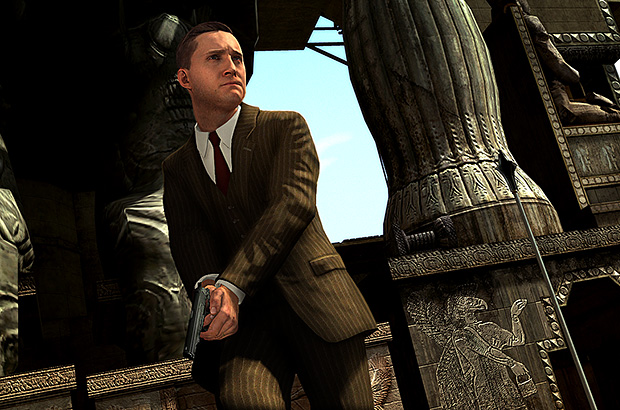
L.A. Noire is a 2011 neo-noir crime video game developed by Team Bondi. Set in Los Angeles in the 1940's, the player is challenged to solve a number of cases across multiple police departments. Players must investigate crime scenes for clues, follow up leads, and interrogate suspects, and the players' success at these activities will impact how much of the cases' stories are revealed. The game draws heavily from both the plot and aesthetic elements of film noir, stylistic films made popular in the 1940s and 1950s that share similar visual styles and themes, including crime and moral ambiguity. The game uses a distinctive colour palette, but in homage to film noir it includes the option to play the game in black and white.


Are players struggling against each other, the game or both?
L.A.Noire is a single player game, eliminating the struggle from player vs player as there is no multiplayer mode. The struggle itself is placed on investigating to gain evidence to solve the games cases, or mysteries. The interrogation mechanic in the game move away from the traditional drip feeding of information to players and replaces it instead with a much more exciting and detailed form of play. The player is required to engage actively in the game, making their own decisions on how and where to engage in the narrative side, which depending on their decisions makes an impact on how the game narative is presented.


What are the interactive experiences provided for players in the game?
The player can freely interact with the crime scene area to find evidence or clues, these are interactive for the player because they get to move around and search freely without the game telling them exactly what to do. The game adapts to the players play style


You have to analyse facial responses and bodily tics like a poker-player seeking tells, then choose one of three tones to adopt for each question. If you accuse a suspect of lying, you must back that up by producing evidence (all accessed, along with along with your records of each case and details of suspects from your standard cop's notebook). If you don't adopt the correct tone, the character you're quizzing will, at the very least, take longer to give you the crucial information you seek.


Does interaction create meaningful play?
The player is made to felt unique and special, as the narrative cannot resolve itself without the players input. The players perception becomes an important part of the narrative, as they player themselves are tasked to reveal the narrative and solve the crime.


What does the game look like?
When I saw the trailers and some of the gameplay, the Grand Theft Auto series sprung to mind, which isn't surprising as both L.A. Noire and GTA are produced by Rocktsar Games. Looking deeper in to the visuals of the game you can clearly see that it takes heavy influences from the film Noir. The large maps allow players to explore the detail rich environment.


Every detail, down to the cars, the clothing, the accents and even the laws of the time have been hit on the head. Players can drive around in over 100 different cars (DLC included) ranging from shabby little motors to elegant powerful cars.

The Stout.

The Voisin.

What are the possible visual influences and intertextual references?
I typed in to google "Influences of L.A. Noire", and would you believe it, there was a whole article on it! The article lists movies, television shows, music, authors and even locations. Below are some of the the findings:

Sweet Smell of Success:
Sweet Smell of Success is a 1957 American film made by Hill-Hecht-Lancaster Productions and released by United Artists. It was directed by Alexander Mackendrick and stars Burt Lancaster, Tony Curtis, Susan Harrison and Martin Milner. The screenplay was written by Clifford Odets, Ernest Lehman and Mackendrick from the novelette by Lehman. Mary Grant designed the film's costumes. The film tells the story of powerful newspaper columnist J.J. Hunsecker (portrayed by Lancaster and clearly based on Walter Winchell) who uses his connections to ruin his sister's relationship with a man he deems inappropriate.


Out of the Past:
Out of the Past (originally released in the United Kingdom as Build My Gallows High) is a 1947 film noir directed by Jacques Tourneur and starring Robert Mitchum, Jane Greer and Kirk Douglas. The film was adapted by Daniel Mainwaring (using the pseudonym Geoffrey Homes), with uncredited revisions by Frank Fenton and James M. Cain, from his novel Build My Gallows High (also written as Homes). Film historians consider the film a superb example of film noir due to its convoluted, dark storyline, dark cinematography and classic femme fatale. The film's cinematographer Nicholas Musuraca also shot Tourneur's Cat People. In 1991, Out of the Past was added to the United States National Film Registry as being deemed "culturally, historically, or aesthetically significant."


Badge 714: 
Badge 714 was a radio series and TV show from actor and writer Jack Webb, the TV show (also known as Dragnet) chronicled real life on the force and re-created the image of the LAPD. I have an old copy of the novel on my desk.


Naked City:Naked City is a police drama series which aired from 1958 to 1963 on the ABC television network. It was inspired by the 1948 motion picture of the same name, and mimics its dramatic “semi-documentary” format.


What other aesthetic qualities does the game present - movement, sound?
I mentioned above that players have a choice of over 100 cards to drive around in, as well as the richly detailed environment. Players can explore their surroundings in a classy looking car, exploring the beauty of a very well made game. The sound used within the game is smooth, sleek, much like the high end cars that the player drives around in. The mixture of the environment, character detail and sound all come together in a beautiful piece of work, inviting the player to immerse themselves back in to the 1940's to act out their part as a detective.

Consider the game in terms of context, origin, year of manufacture, company, target audience, does the game contain any persuasive purpose, what would make the game more effective and what potentials does the game point to?
The effectiveness of this game is almost absolute. The amount of detail put into making this game incredibly interactive shines throughout, and the classic 1940s feel to the game puts you right in the midst of the action. Without actually playing the game, I do not feel comfortable with saying much more.